
@jasminekayart
About
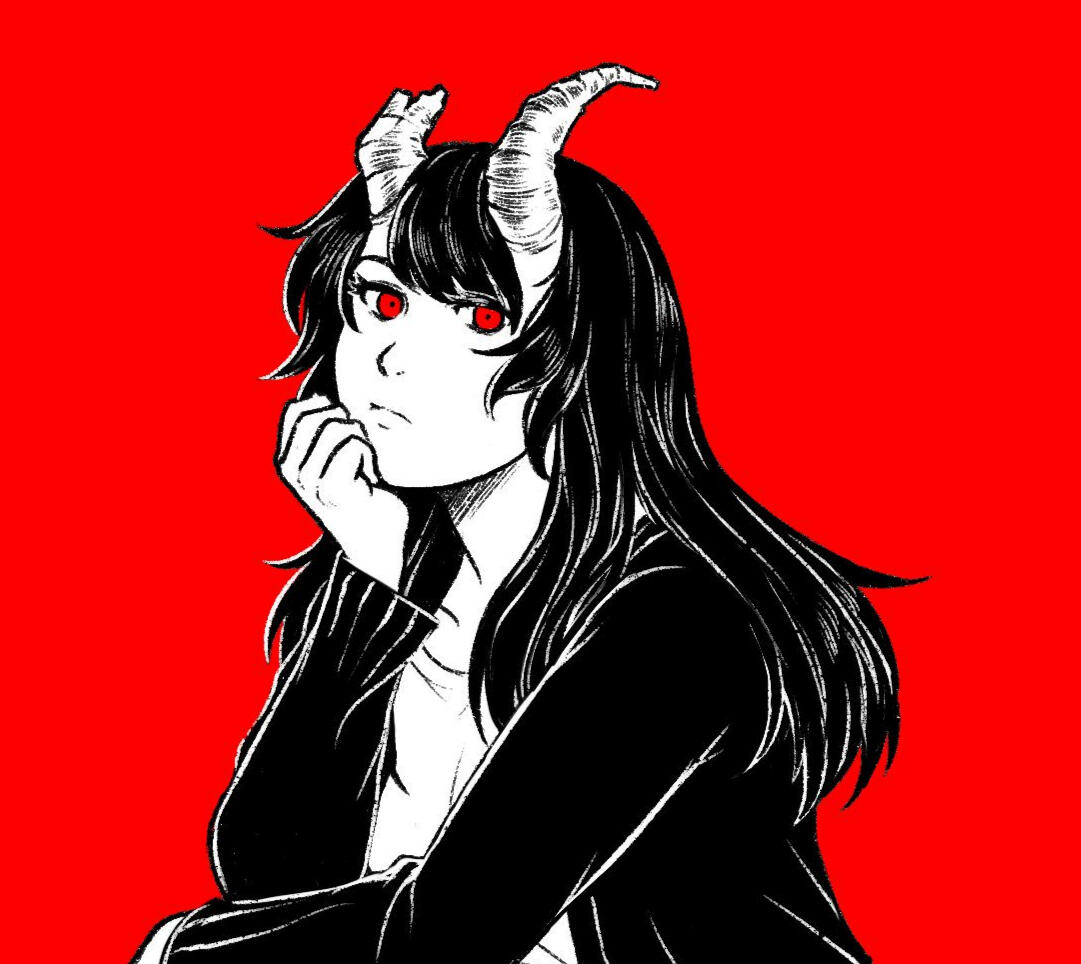
Hello! My name is Jasmine Kay. I am a Texas based Filipino-American artist that focuses on digital 2D art, specifically illustration and design.I am always looking for new ways to grow as an artist and love sharing my experiences with others. Thank you for checking out my work. I hope you enjoy it!
Illustration
Personal Work
Commissions
Fan Art
Design
Branding
Logos
Stream Assets
UI/UX
Projects
Personal Projects
BRAIN ROT
Illustration series (NSFW)
Mumuktubre: Philippine Mythological Creatures
drawing prompt series (NSFW)
MALAYA AND KALO
Visual Development
LEMON DESSERTS
Vector Art
WIP FOLDER: ALWAYS IN PROGRESS
Brand Concept
Collaborative Projects
TO THE CORE AGAIN
Video Game Capstone
TO THE CORE AGAIN: ORIGINS
Animation
MIRACULOUS REANIMATED
Animation
KINGDOM HEARTS COOKBOOK
Fanzine
KINGDOM HEARTS 2020 GRAPHIC PROJECT
KH Graphic Art Community collaboration
Mumuktubre
This is a series of drawings featuring Philippine creatures and mythical beings inspired by the #mumuktubre prompt list made by @oletarts on Twitter and the descriptions provided by The Aswang Project.
To the Core Again
A collaborative video game project made under The University of Texas at Austin’s 2D Game Development Capstone course. This puzzle-platformer follows a journey of self-reflection and recovery as the protagonist struggles to face memories from their past.
To the Core Again is now available for download at itch.io: gatorpcorp.itch.io/to-the-core-againAn unnamed character discovers that they have the ability to “shift” from reality to a mirrored dimension. Here, this realm isolates and keeps them safe from the harms of the physical world. However, this alternative world houses repressed memories and fears that manifest into aggressive creatures. The main character must find ways to overcome these obstacles by “shifting” between dimensions. In a journey of healing and self-discovery, they begin to come to terms with their past and find reason to hope again.
The Team:
Jaemin Go – Programmer, Music
Scott Huang – Programmer
Mikki Pasasadaba – Artist, Cutscenes, Writer
Christopher Philip – Level Designer
Luben Popov – Programmer
Jasmine Uy – Artist, Animator
Producer:
Paul Toprac
Producer:
Aidan Kessler
Michael Baker
All of our play testers
About the Project
To the Core Again game was made through the University of Texas at Austin’s 2D Game Development Capstone Course. Students were divided up into small teams of about 7 students and had 16 weeks to complete a full game from scratch. We utilized Agile/Scrum methodologies, meeting weekly deadlines and consistently play testing our games with industry professionals. At the end of the 16 weeks, we published our game to itch.io and demonstrated it to the public during the Fall 2017 Digital Demo Day. We would later be invited to represent UT Austin at the Intel University Games Expo and be chosen as one of the finalists for the Intel University Games Showcase.To the Core Again focuses on the journey of a young protagonist and their journey of healing from emotional trauma. Each level is based on the character’s progress through different stages of the healing process, from atmosphere, level design, music, and enemies. With contrasting and exaggerated treatment of colors, visuals, and metaphorical imagery, this “other” world personifies the main character’s inner self during their journey of healing. My initial concept art was meant to establish these themes and feel out the direction of our game.The analogous color palettes in each level parallel the emotions of loneliness, anxiety, and agency. Each area is meant to have a unique environment and atmosphere that represent the main character’s state of mind.I started off the conceptualization of our game by creating color keys for each level. At this stage, we were still unsure of the exact direction of the game, which is why it bridges fantasy and sci-fi. However, we were all in agreement of the themes we wanted to portray, so I tried to capture the atmosphere of each level. These thumbnails ended up jump starting a lot of our ideas and served as inspiration for all the music and level design elements.
Shell 1
Themes/elements: loneliness, avoidance, isolation, abandonment, numbnessShell 1, which is mostly dominated by a dark blue color scheme, represents the character’s isolation and loneliness. At first, the other world serves as an escape for the protagonist from the overwhelming urban environment. This reflects the character’s unwillingness to confront their problems at first, separating themselves from the world around them. However, the monsters that blend in with the surroundings give the player a sense of uneasiness as they realize the alternate dimension is not as safe as it originally seemed.
Shell 2
Themes/elements: anxiety, fear, uncertainty, toxicity, decay, fogThe second level is based on the fear and anxiety that comes with facing their trauma. We wanted to get a sense of toxicity, either from the toxic relationships from their past or the character’s own self-destructive habits. The original design contained a lingering fog that would obscure parts of the level, representing the uncertainty of what may lie ahead. Despite this, it also shows that the character must recognize and face their fears in order to continue forward. Shell 2’s environment was meant to show that perhaps the main character purposefully puts themselves in dangerous situations and sometimes takes part in self-destructive behaviors
Shell 3
Themes/elements: nightmares, intrusive thoughts, overwhelmed, empowerment, breaking freeThe third level is based on the anger and rage from the things that happened to the character, but it also represents the determination to take back their lives and move forward from their trauma.Shell 3 is meant to be the most dangerous and frantic. The original design had a stronger chasing element throughout the whole level and collapsing platforms. We also went back and forth between what environment would represent the themes of the level and ultimately decided to make it take place in a library. Libraries are where people go to find answers. It’s a good place to be in when you don’t know who you are, providing a nice quiet place and books to take you to another world. We had also been juggling the idea of making Shell 3 a burned down church since it has a lot of the same elements the library provided, but after some team discussion, we decided that the library environment would give more opportunities for platforming
The Core
Themes/elements: self-esteem, meaningful life, acceptance, peaceThe Core is meant to represent the character finding resolution with their past as they start looking forward to a new life. Here, the character pieces together their past in order to make sense of it. It serves as a stark contrast to the previous levels, providing a sense of real peace and serenity.To take these poignant and mature themes and turn it into an actual game, we focused on two core design elements. The first being non-linear level designs. The game is linear in the sense that you clear three main levels of the game, but to progress, you must explore to collect three memory shards. Each shard triggers a brief cutscene that shows the player a glimpse into the character’s past. You can collect these crystals in any order that you want throughout each level. Just as the literal collection of the character memories of their traumatic experiences is not a linear process, neither is the journey of self-discovery and healing. The way the player experiences the story is also non-linear. Different players will experience different parts of the story at different times than others.The second mechanic is the character’s dimension shifting, which is inspired by Titanfall 2’s time traveling mechanic. At any time the player can switch between reality and what our team called the “Dissociative World”, representing the character’s own dissociation. This world is filled with physical manifestations of the character’s worst fears and nightmares. These monsters only appear in this other world, but so do only the memory shards. Just as the character has to face their inner demons to figure out their memories and come to terms with their past, the player must find ways to move past these demons in order to progress the story. The player must also use evasive strategies in order to navigate through the level, for there is no way to fight back against these monsters.We wanted To the Core Again to be open ended enough for people to connect to the character with their own personal stories. Even for our team this game served as a type of catharsis for our own experiences. We wanted to show that though the memories of our past are a part of us, it doesn’t have to define who you are.
Exhibitions
To the Core Again at UT Austin’s Fall 2017 Digital Demo Day
To the Core Again was first released to the public during UT Austin’s Digital Demo Day, an event that showcases students’ interactive media projects from the semester. It was open to UT students and the general public.
To the Core Again at the Intel University Games Expo and Showcase
During the 2018 Game Developers Conference, my team and I had the honor of representing The University of Texas at Austin at the Intel University Games Expo. The Expo featured more than 20 universities, each demonstrating one of their top student games. This year, two of the Expo participants were chosen to appear in the Showcase, earning the chance to compete for prizes with other Showcase participants. To the Core Again was one of these qualifying games, and we were able to present our project to a live audience.The other schools that presented during the showcase include USC, Carnegie Mellon University, DigiPen Institute of Technology, Drexel University, The Guildhall at Southern Methodist University, New York University, University of Utah, Savannah College of Art and Design, University of Central Florida/Florida Interactive Entertainment Academy, Rochester Institute of Technology, University of Wisconsin/Stout, and University of California/Santa Cruz. UT Austin and Bringham Young University were the two qualifiers chosen during the Expo, and only had a few hours to prepare their Showcase presentation.
To the Core Again at UT Austin’s It’s Not What You Think: 2018 Senior Art Exhibition
To the Core Again as well as its trailer were featured as part of the senior art exhibit for UT Austin’s undergraduate Studio Art and Visual Art Studies seniors. The show ran from March 9-April 6 in the Visual Arts Center and was opened for the general public on March 23, 2018.
To the Core Again: origins
To the Core Again: Origins is the prologue to To the Core Again and gives a clearer vision of the protagonist’s traumatic past. It focuses on the complexities of abuse and the character’s relationship with their parents throughout their childhood.
The Team:
Jasmine Uy – Storyboards, concept art, digital paintings
Christopher Philip – Animation, editing
Mikki Pasasadaba and Luben Popov – Writing
Jaemin Go and Scott Huang – Music
Characters
To the Core Again as well as its trailer were featured as part of the senior art exhibit for UT Austin’s undergraduate Studio Art and Visual Art Studies seniors. The show ran from March 9-April 6 in the Visual Arts Center and was opened for the general public on March 23, 2018.
Protagonist
The unnamed main character of To the Core Again. Origins Starts off with them as a young child and progresses through their life into their late teens, showing the escalation of their anxiety and dissociation.
Father
The main antagonist of the story. The early memories of the protagonist shows there were good memories between them and their father, but the line between good and bad blur as more violent memories take over.
Mother
The secondary antagonist of the story. Though she does not have as direct of an impact on the protagonist as the father, the mother’s neglect and rejection is what drives the protagonist to isolate themselves.Originally, there were plans to have a greater emphasis on the passage of time and the slow development and deterioration of the relationship between the protagonist and their parents. The different hairstyles were meant to show these time periods and the way the character’s percieved their parents. We wanted to parallel and frantically merge different times in the character’s life to reflect their anxiety, confusion, and experiences of dissociation. Unfortunately due to time constraints, we were not able to develop those scenes as deeply as originally planned with some being completely omitted from the final project.
Other
Sketches/Studies
Made Just for Fun
The following pieces may not fit my current work, but they're still things I worked on and am fond of!
Animation
3D Modeling
Video